Based on what you can deduce from both readings, highlight what you think are the strongest arguments for and against the following proposition: “The Original Constitution was Proslavery.”
Week 4: Slavery and Dred Scott
Based on what you can deduce from both readings, highlight what you think are the strongest arguments for and against the following proposition: “The Original Constitution was Proslavery.”
 Constitutional Law (Powers): Spring 2020
The most persuasive argument against a pro-slavery Constitution is the lack of text in the Constitution. The Constitution recognizes slavery but doesn’t mandate it or ban it (not until the 13th amendment). Whether it was because they thought the institution would never end or it was some long game played by abolitionists, it isn’t explicitly mentioned. This put the question to the people and not a piece of paper or the Supreme Court or the delegates at Philidelphia. The weakest argument is Nikole Hannah-Jones’ entire article. She assumes a lot about the intentions of the Framers without using any evidence. She mentions multiple clauses of the Constitution that don’t explicitly protect slavery, but she implies it does anyway. For example, the protection of property rights does not define property as slavery. The Constitution was not pro-slavery, but the institutions surrounding it did.
LikeLike
One of the supporting arguments for the continuation of slavery is the idea of what Jones states were part of the “founding mythology” (3). She states that one of the most important reasons that colonists “declared their independence from Britain was because they wanted to protect the institution of slavery.” (Jones 3). She also writes that some would argue that America was founded as a “slavocracy” and not a “democracy.” The United States would not have revolted against the English had they “not understood that slavery empowered them to do so; nor if they had not believed that independence was required in order to ensure that slavery would not continue, ” (3)
On another hand, Thomas Jefferson believed that slavery was not, in fact, the doings of the American colonists but by by the King of England who originally “forced the institution of slavery on the unwilling colonists and called the trafficking of human beings a crime, ” (3). However, instead of following the British, Jefferson nor his founding colleagues abolished slavery just then and removed the passage condemning it from the Declaration of Independence.
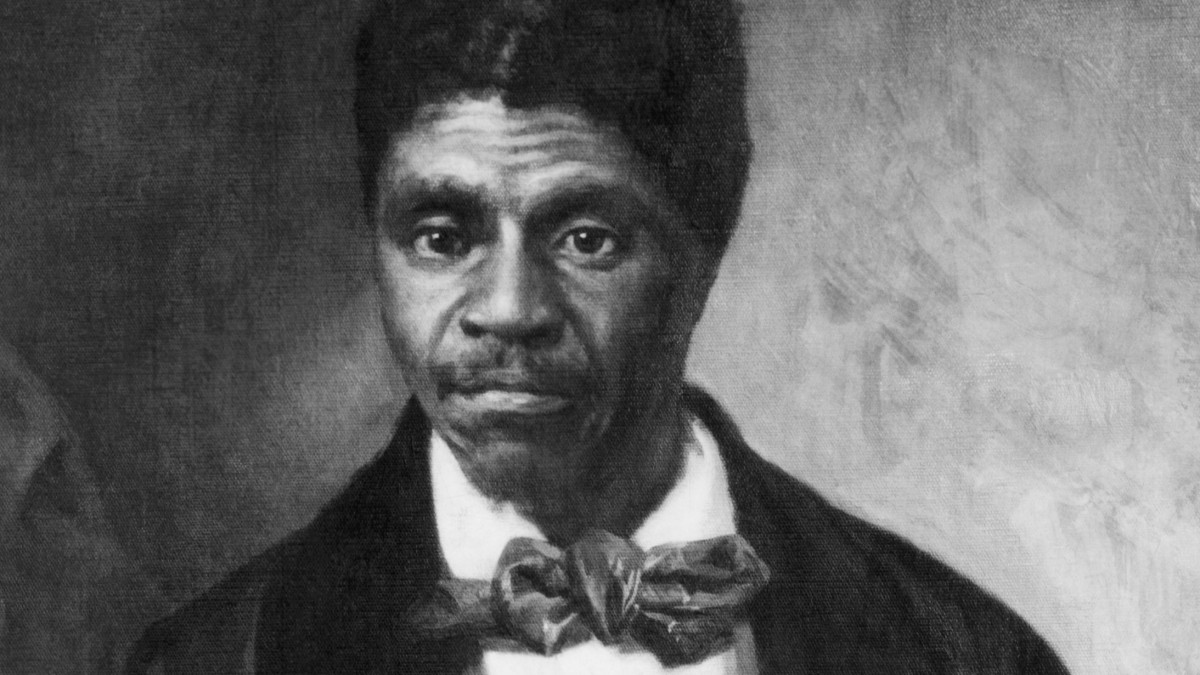
When the constitution was drafted the ‘framers’ composed a document that preserved and protected the institution of slavery. They never included the word ‘slavery’ among the language rather they used “property” of the enslavers and the protection of the enslavers. As we all know, slaves were not deemed human beings until much later (if really ever) and so the constitution was protecting the enslavers who continued to treat their slaves as property to which they owned. This was even more supported in the decision of the Dred Scot case of 1857.
Though Lincoln suggested that Blacks be separated from whites in order to be seen within their own humanity and context of their own life after slavery, many slaves remained in the colonies. “That the formerly, enslaved did not take up Lincoln’s offer to abandon these lands is an astounding testament to their belief in this nation’s founding ideals, (5). Though the original constitution was definitely pro-slavery, slaves immersed themselves in the new nation and became part of the democratic process.
m.jenniferbernard@gmail.com
LikeLike
In the New York Times Magazine, Hannah Jones argues that the original constitution was proslavery. The framers of the constitution actually sought to protect the institution of slavery. Slaves were referred to as property, and the constitution protected the property of slave owners. In article IV, the constitution states that, “no person held to service or labor in one state, under the laws thereof, escaping into another, shall, in consequence of any law or regulation therein, be discharged from such a service or labor”. This clause is a direct indication that the constitution was proslavery. The constitution prevented Congress from ending the importation of slaves for a 20 year period. I personally find it mind-blowing that one of the reasons why Americans sought independence was to prevent the abolishment of slavery. They wanted to be independent from Britain because they saw that I Britain, there was an uprise against slavery and if slavery was abolished in Britain then it could be abolished in the colonies. This just makes the whole founding based on lies and hypocrisy.
In Constitutional Myth Making, Sunstein argues that the constitution was not proslavery. He claims that the idea that the constitution protects slavery is a myth. Sunstein argued that although some of the framers of the Constitution practiced slavery, they did support it in the Constitution. He claims that the constitution does not say that slaves are not citizens due to the three-fifths compromise. He makes the argument that if three-fifths of the slave population can be represented, then slaves are 100% human and therefore citizens.
LikeLike
Thanks Eliayakol – you’ve grasped the two arguments very well!
LikeLike
It should be known that my response regarding the strength of the arguments both for and against the proposition that the United States Constitution was “pro-slavery” is influenced by prior knowledge, as well as the assigned readings.
In brief, I believe that anyone who does not hold that the Constitution was—at least to some extent—built on a foundation of pro-slavery would face monumental difficulty in proving so. The vast majority of the evidence points too much to the contrary. As Hannah-Jones explains in her article “America Wasn’t a Democracy, Until Black Americans Made it So,” the Dred Scott decision enshrined the notion that black people, regardless of freedom status, derived from a “slave race.” Judged as “a separate class of persons,” black people were, as per the Supreme Court’s ruling, not afforded the same constitutional rights and liberties as their white counterparts. Although this may seem to be the obvious, the enslavement of an individual is a fundamental attack on their “inalienable rights” to life, liberty, and the pursuit of happiness. Therefore, a nation that, at least prior to 1857, legally permitted “slave states” to co-exist equally alongside “free states” demonstrates the Constitution’s support of slavery. Black people, by-and-large, were not even considered to be American citizens, despite vehement citations of Article Four from anti-slavery legislators. As such, slavery was allowed to thrive without repercussion until Lincoln’s Emancipation Proclamation in 1863. Prior to that executive order; however, the Constitution itself was unable to secure constitutional rights and freedom to black people on its own accord.
Sustein’s claim that, “There was no reason to think that freed slaves should not qualify as citizens for constitutional purposes,” is probably the strongest argument one can make regarding the opinion that the Constitution was not pro-slavery. Despite his premise about the Constitution not explicitly handing property rights to slave owners, the fact that slavery was legally permitted to be perpetuated without constitution intervention ultimately refutes this point.
LikeLike
Thanks, Eric. There are historians who are questioning the 1619 project, and providing some evidence that the Constitution was not really proslavery at all, especially Sean Wilentz and, to a lesser extent, Gordon Wood. See Wilentz’s critique here: https://www.theatlantic.com/ideas/archive/2020/01/1619-project-new-york-times-wilentz/605152/
LikeLike
It should be known that my response regarding the strength of the arguments both for and against the proposition that the United States Constitution was “pro-slavery” is influenced by prior knowledge, as well as the assigned readings.
In brief, I believe that anyone who does not hold that the Constitution was—at least to some extent—built on a foundation of pro-slavery would face monumental difficulty in proving so. The vast majority of the evidence points too much to the contrary. As Hannah-Jones explains in her article “America Wasn’t a Democracy, Until Black Americans Made it So,” the Dred Scott decision enshrined the notion that black people, regardless of freedom status, derived from a “slave race.” Judged as “a separate class of persons,” black people were, as per the Supreme Court’s ruling, not afforded the same constitutional rights and liberties as their white counterparts. Although this may seem to be the obvious, the enslavement of an individual is a fundamental attack on their “inalienable rights” to life, liberty, and the pursuit of happiness. Therefore, a nation that, at least prior to 1857, legally permitted “slave states” to co-exist equally alongside “free states” demonstrates the Constitution’s support of slavery. Black people, by-and-large, were not even considered to be American citizens, despite vehement citations of Article Four from anti-slavery legislators. As such, slavery was allowed to thrive without repercussion until Lincoln’s Emancipation Proclamation in 1863. Prior to that executive order; however, the Constitution itself was unable to secure constitutional rights and freedom to black people on its own accord.
Sustein’s claim that, “There was no reason to think that freed slaves should not qualify as citizens for constitutional purposes,” is probably the strongest argument one can make regarding the opinion that the Constitution was not pro-slavery. Despite his premise about the Constitution not explicitly handing property rights to slave owners, the fact that slavery was legally permitted to be perpetuated without constitution intervention ultimately refutes this point.
LikeLike
Sunstein argues that the Constitution is not proslavery and states that people believing that the Constitution “protected, supported and entrenched slavery” is a myth connected to the Dred Scott case. He suggests that the Supreme Court judges overstepped their duties in the Dred Scott case and pretended that the Constitution was clear in it’s stance on slavery. This confidence in their answer despite a lack of strong arguments to explain their thinking could influence people into thinking that the Constitution was proslavery without ever reading the document. He states that the Constitution is ambiguous in its wording and meanings regarding slavery, and therefore does not encourage slavery.
Nikole Hannah Jones has a different belief. She explains that the founding fathers decided to write in the Declaration of Independence that “all men are created equal,” while simultaneously working to discredit and dehumanize black people so that they would not even be considered to be man, much less equal. She points out that while making the Constitution, the mostly slave owning writers were careful to protect their right to own slaves while never directly mentioning slavery, therefore protecting themselves from criticism while keeping their right to own people as property. Six of the Constitution’s clauses deal directly with enslavement and five more “hold implications of enslavement.” If the Constitution was not proslavery, why would 11 of the 86 clauses be dedicated to slavery and its preservation?
LikeLike
Sunstein explains that the Constitution did not endorse slavery. When deciding Dred Scott, Judge Taney could not rely on the ambiguous constitutional text but instead on his own understanding of the original intentions. The Constitution is a text that relies on the applications of its judges’ understandings, so the pro-slavery stance that Sunstein took from the Constitution was wrong and the Constitution does not actually support slavery.
However, regardless of the Constitution’s ambiguity, its text still allowed for the interpretation to endorse slavery and remove black Americans of their rights. Taney explicitly says, “The right of property in a slave is distinctly and expressly affirmed in the Constitution.” Regarding the defendants, Taney does not describe them as people but as property. He sticks to his constitutional understanding of slaves as property and removes them of their citizenship and rights. In this way, Taney still uses the Constitution to confirm its text and institution as pro-slavery and anti-black. Per the 1619 Project, the Constitution also laid the foundation to institutionalize slavery by creating “a network of laws and customs, astounding for both their precision and cruelty, that ensured that enslaved people would never be treated as such.”
LikeLike
When considering whether the original constitution was proslavery or not, many point to the Dred Scott Supreme Court decision. In this case Chief Justice Taney’s proclaimed that descendants of slaves were a racially inferior class subordinate to the dominant race, and thus could not be a citizen. Chief Justice Taney based his ruling on what he claimed to be an “originalist” interpretation of the constitution. Many have taken his ruling and reasoning as evidence to indict the constitution as a proslavery document. However, as Sunstein points out, since the constitution was vague on the matter of slavery, Chief Justice Taney had to imagine how the framers would have perceived slavery back in the late 18th century.
An optimistic perspective on the matter would say; there is no doubt that many of the framers themselves were slave owners and the society they lived in predominantly favored slavery. But, the framers of the constitution could have explicitly mentioned their support of slavery, but intentionally chose to leave the matter vague. Abolishing slavery at the Constitutional Convention might have been too much for the people of the 1780s to handle. Yes this would kick the proverbial, can down the road, for later generations to deal with, but in doing so the possibility to remove slavery remained.
On the other hand, intentionally leaving the matter of slavery vague can be considered as a subtle endorsement of slavery. I operate on the belief that neutrality doesn’t really exist, you are either in favor or against a particular issue. If you claim to be neutral, then your silence on the matter is the equivalent to supporting the status quo. In this case, the status quo in the 18th century would have been to support slavery. Therefore, a more cynical interpretation of the framer’s silence on slavery could be tantamount to an endorsement of slavery.
LikeLike
If the “Original” Constitution means everything up to the 12th amendment then I should argue for the statement above. I believe The New York Times reading proved that. If people from African descent were sold and bought that therefore includes the assumed contract between a buyer and a seller. That, therefore, makes people who are sold or bought the property of someone else. Private property is well protected by the 4th and 5th Amendments. From here we can come to the logical conclusion that if Constitution up to the 12th Amendment does not mention slavery, protects private property, and slaves were the property during the ratification of the document and during the era of Founding Fathers then yes, as sad as it may sound, but the “Original” Constitution does protect slavery in the United States.
With Amendments added to it, I believe we can read the document as the opposition to slavery. Dred Scott was decided before the 13th Amendment, and therefore, I assume, it automatically reverses the decision of the Court. I am sure that Justice Taney would deliver a different opinion if the case would stand before the court a decade later.
LikeLike
Based on both readings, the strongest arguments for the following proposition was that the original Constitution protected property and slaves were considered property so the government could not abolish this and those who escaped had to be turned over. Additionally, the ruling from the landmark case of Dred Scott in 1857 ruled that African Americans (free or enslaved) were not slaves so they could not sued in court which perpetuated inferiority towards African Americans in the minds of white Americans including the three-fifths clause in the Constitution. However, the weak arguments that Jones made was that without African Americans, others are able to come to the United States and that it is an American irony that some Asian Americans are suing universities to end programs designed to help the enslaved as she does little to explain why this is an irony. Sustein fails in stating that even if Justice Taney’s statement about Congress’s power over the territory cannot collide with other constitutional limitations and backs this up by explaining how international law fits with slavery, yet we are focus on the law in American nation instead of across different nations.
LikeLike
The strongest argument for the proposition ” The Original Constitution was Proslavery” would be Nikole’s argument to stress it to the audience that America was not free until it was the Black Americans who have fought to make the Constitution and the Bill of Rights be true. While the Constitution was being written by the Framers cotton was the main supply. Roughly about 66% of world’s supply would be made by African Slaves. Nikole’s argument to provide the fact about how the Proclamation allowed enslaved to join the Union Army and fight demonstrates how the original constitution was never meant for Slaves. Also, Nickole mentioned how the main reason to declare independence from Britain was to protect the institution of slavery. I think these are the strongest arguments for the proposition because I do believe that the Constitution was written in a way to protect its economy and protecting individual’s property. When I think about the property I automatically know that Slaves were part of their property. The pursuit of ” life, liberty, and property” meant to grant White men their individual freedom while their land and Slaves were part of them. The constitution didn’t even apply to slaves because they weren’t humans but rather a property.
The strongest argument against the proposition ” The Original Constitution was Proslavery” would be that it was more of the states that were proslavery rather than the Constitution. For example, when Justice Taney decided that Missouri compromise was against the law it was up to states to make that decision whether they wanted slaves to be considered U.S. citizens or not. At that time, Congress didn’t have the power to decide where slavery could be allowed so it all falls back to how the states would handle their case when it came to Slaves asking for freedom.
LikeLike
The strongest argument for the proposition ” The Original Constitution was Proslavery” would be Nikole’s argument to stress it to the audience that America was not free until it was the Black Americans who have fought to make the Constitution and the Bill of Rights be true. While the Constitution was being written by the Framers cotton was the main supply. Roughly about 66% of world’s supply would be made by African Slaves. Nikole’s argument to provide the fact about how the Proclamation allowed enslaved to join the Union Army and fight demonstrates how the original constitution was never meant for Slaves. Also, Nickole mentioned how the main reason to declare independence from Britain was to protect the institution of slavery. I think these are the strongest arguments for the proposition because I do believe that the Constitution was written in a way to protect its economy and protecting individual’s property. When I think about the property I automatically know that Slaves were part of their property. The pursuit of ” life, liberty, and property” meant to grant White men their individual freedom while their land and Slaves were part of them. The constitution didn’t even apply to slaves because they weren’t humans but rather a property.
The strongest argument against the proposition ” The Original Constitution was Proslavery” would be that it was more of the states that were proslavery rather than the Constitution. For example, when Justice Taney decided that Missouri compromise was against the law it was up to states to make that decision whether they wanted slaves to be considered U.S. citizens or not. At that time, Congress didn’t have the power to decide where slavery could be allowed so it all falls back to how the states would handle their case when it came to Slaves asking for freedom.
LikeLike
The strongest argument that the US Constitution was proslavery is presented in the Sunstein’s article. Sunstein refers to the remarks of Thurgood Marshall and his view on slavery at the bicentennial in 1987 (p.2.). Marshall’s speech says that “Despite this clear understanding of the role slavery would play in the new republic, use of the words ‘slaves’ and ‘slavery’ was carefully avoided in the original document.” … “And so, nearly seven decades after the Constitutional Convention, the Supreme Court reaffirmed the prevailing opinion of the Framers regarding the rights of Negroes in America. It took a bloody civil war before the 13th Amendment could be adopted to abolish slavery, though not the consequences slavery would have for future Americans”
* http://thurgoodmarshall.com/the-bicentennial-speech/
In my understanding, Thurgood Marshall’s opinion on the matter is the most insightful in understanding why the US Constitution was proslavery. Although both articles present further detail elaboration on why the Constitution was proslavery. However, I found Marshall’s bicentennial speech to be perceptive on the matter. For the first United States African American Supreme Court Justice to say that the constitution was proslavery, further establishes how the precedent of Dred Scott v. Sandford, 60 U.S. 393 is vital in Constitutional Law.
LikeLike
-Martin B. (PSC212)
LikeLike
Thanks for the Marshall reference – excellent. We’ll talk more about whether he’s right in class
LikeLike
While this isn’t necessarily an argument mentioned in either reading, I would argue that the strongest argument for the proposition is the fact that the Constitution was not explicit in this regard. As Sunstein says, “the Constitution does nothing to entrench slavery. It recognizes the existence of the institution but does little more than that.” If I acknowledge that a crime is happening but continue to let it happen, wouldn’t you argue that I am pro-crime? I would. Better yet, if I do not correct people when they make racist remarks, wouldn’t you argue that I too am racist? If you can acknowledge that X is happening without substantiating it, I feel that it makes you pro-X. Some parts mention that the Constitution “does not distinctly and expressly affirm the property rights of slaveowners”, and perhaps some will use that as an argument against the proposition. The other obvious point as mentioned by Jones for the proposition being that the Constitution cannot be anything but pro-slavery as it failed to apply “Life, Liberty, and the pursuit of Happiness… to one-fifth of the country”.
LikeLike
In my opinion, there is no doubt that the original Constitution was proslavery, from the very first words, “We the people” it was said to make clear that the statement was only including White men. The entire constitution was built and written with White men in mind since all four Founding founders were white wealthy men. Not only were they white and wealthy but the founding founders themselves were enslavers. Another argument that can be made to show that the original constitution was proslavery is the 3/5ths Compromise. The 3/5th compromise’s main purpose, in my opinion, was to show how inferior African Americans were in the eyes of White people. The compromise stated that one slave was equal to 3/5th of a free man; the absurdity of this statement is an understatement.
However, some may say that the original Constitution was not proslavery since in the original document not once was the word “slavery” stated. In fact when speaking about the people of this country it was stated, ” all men were created equal” and all men have the right to “life, liberty, and pursuit of happiness” nowhere in these statements are the founding founders singling out a specific group of people.
LikeLike
The Articles of Confederate was at its infancy lacking a Bill of Rights. Without a Bill of rights freedom or individuals and protection of states’ rights would be deprived of.
With is being said, clearly the notions of the founders were to preserve slavery as this system was very profitable.
The constitution was a reflection of the core values the founding father had and it depict the type of nation that was to be established. The original constitution was established through principles of the preservation of life, liberty and pursuit of happiness. Ironically, the constitution believed in such values yet exempting people based on race.
A quote from Nikole Hannah-Jones article, “Life, Liberty and the pursuit of Happiness” did not apply to fully one-fifth of the country., “Yet despite being violently denied the freedom and justice promised to all, black Americans believed fervently in the American creed.”
With this being said, the fact that slavery wasn’t abolished to begin with, elucidates the acceptance for the slavery system. This quote is essential when analyzing the ideas of the founder’s, although believing in such values it was only applicable to white Americans. Nonetheless, disregarding blacks of such principles and promoting racial isolation.
The article by Nikole Hannah-Jones was very descriptive outlining the distressing experience of Slaves and their unrecognized contribution to the U.S. She holds a sturdy belief that the constitution was both founded on a lie and on an ideal. However, the aftermath of the lives of black Americans manifest that the original constitution was pro slavery possibly for economic reasons and empowerment. The fact that the constitution protected property of enslavers acknowledges the institution of slavery indirectly without necessarily citing it.
The article by Cass R. Sustein argues against the proposition that the original constitution is proslavery. In the case of Dred Scott, the myth that arouse was that the original constitution protected, supported, and entrenched slavery. It is alleged to be a myth on a legal matter since the constitution protects rights of the people. I do not agree with this idea being a myth because the constitution was written with much ambiguity and did not specify who “we the people” include. From this same article on a revisionist perspective, Scott’s conception of social policy and his belief that the court abandoned the intentions of the framers mends to be a myth. I disagree once again because Mr. Scott was a very intelligent man. Although he may not have received an education he was well informed and went to file four times. I don’t think you need to know how to read to have an original understanding of the framers ideology. This contradicts that the constitution was in fact pro slavery as his interest for social policy was different to the framers whom endorsed slavery.
LikeLike
The strongest argument in favor of the proposition that the constitution was pro-slavery is described in the NYT article. The founders were not playing dumb with the topic of slavery while drafting the constitution. If slavery was forced on the colonists by Britain, why was there no explicit mention of abolishing slavery in the declaration of independence and later in the constitution in order to stay consistent with their demands for freedom? It is therefore easy to assume that by using “ambiguous” terms in the constitution, as asserted by abolitionist Samuel Bryan, the framers effectively hid their hypocrisy. And it is also a bitter irony that the same constitution upholds individual liberty while also upholding individual property that protected slaveowners at the expense of enslaved black individual liberty. During the Dred Scott case, it also became clear that Taney’s court interpreted the constitution and came to the conclusion that enslaved people could not sue in federal court because they are not citizens and that the constitution protected the property rights of slaveowners. Thus proving that although the constitution did not explicitly address the question of slavery it did, however, protect it on a technical level.
LikeLike
Based on both readings one of the strongest arguments against the proposition “The Original Constitution was Proslavery” in Sunstein’s reading was that the Constitution recognized the institution of slavery but did not endorse it. The Constitution had its three-fifths clause where slaves counted for 3/5 of a human being, but that would lead to believe then a freed slave counted as a full human. The Constitution and clause never specified which group of people based on physical features counted as slaves. While the Supreme Court decisions and interpretations of law are final, they are not the only interpretation that should be accepted. The case had ground on allowing Dred Scott his freedom but because of the time period, the law took an opposite approach, an approach that was against Scott’s favor. In Graber’s reading there was more blame on extremists than the actual Constitution.
In Graber’s reading, there are many arguments stating reasoning for the proposition “The Original Constitution was Proslavery” because of Taney Court. The limitation of national government to interfere with states rights was a cause of the belief of allowing continuous slavery. The question of citizenship and whether or not freed African Americans descendants had citizenship rises the belief that the Constitution was proslavery because it was never addressed. When it was addressed it stated that no, they could not be free citizens because they were not citizens in the first place. Sunstein’s reading states that the Constitution being proslavery is a myth.
LikeLike
A strong argument for the following proposition: “The Original Constitution was Proslavery” is ‘The Constitution protected the “property” of those who enslaved black people, prohibited the federal government from intervening to end the importation of enslaved Africans for a term of 20 years, allowed Congress to mobilize the militia to put down insurrections by the enslaved and forced states that had outlawed slavery to turn over enslaved people who had run away seeking refuge’ (Jones, NYT). The founding founders maintained that enslaved black people were viewed as inferior beings and properties. It wasn’t until during and after the civil war with the reconstruction amendments and the emancipation that black americans were considered human and somewhat equal to their white counterparts. This country was built on the backs of racist principles such as slavery. Article I, Section 9 states, “The Migration or Importation of such Persons as any of the States now existing shall think proper to admit, shall not be prohibited by the Congress prior to the Year one thousand eight hundred and eight, but a tax or duty may be imposed on such Importation, not exceeding ten dollars for each Person” which was added almost 21 years after the ratification of the Constitution. The Constitution was always in favor of slaveowners through the unregulated trade slave and also giving them more political representations by counting slaves as 3/5 of persons. An argument against the proposition is ‘ the Constitution does nothing to entrench slavery. It recognizes the existence of the institution but does little more than that.’ I do agree that the Constitution recognized that slavery is an unacceptable institution. There are articles within the Constitution that do try to correct the wrong to the right but the Constitution is somewhat ambiguous on what it is trying to establish. Although, I do not agree that it does not endorse the institution itself.
LikeLike
I believe the Constitution was pro-slavery because African Americans weren’t considered human. They were considered property which was compared to horses and land. The animals and land were better attended to than the African American slaves. The argument they were included in the 3/5th clause was for taxation and representation in the slave states, which gave slave owners more influence and political power. The slave owners wielded more power in the House of Representatives arguably because of the slave count and over-representation. The framers I believe tried to mask slavery in the Constitution with is slaveowners mentality. They did not mention slavery that much in the Constitution maybe it was out of embarrassment because during this time period some in the International communities were condemning the colonies for its slavery policy.
LikeLike
As stated by Sunstein, the framers knowingly did not endorse slavery nor did they entrench slavery within the written text of the constitution. It can be argued that the framers did not explicitly acknowledge the presence of slavery because their intensions were to create a constitution that would adhere to law rather than politics. In fact the framers might have intentionally left out explicitly addressing slavery within the text to maintain a certain level of neutrality and textual dignity/morality of the constitution, making it unlikely for the constitution to become some sort of political playground. However, if forced to pick a side, the framers most likely would have denounced and irradiate the institution of slavery within the structure of the developing American democracy. The three-fifth-compromise highlights the mindset of the framers and their stance on the institution of slavery within American society. Often time the three-fifth compromise is used as proof to show that the framers were pro-slavery when in fact this compromise incentives for the abolition of slavery. The three-fifth compromise gave reason for slave states to recognize the African American community as citizens in order to boost their representative power and influence within a representative government. This would have potentially worked out to be a win-win for both the slave population and the their enslavers thus creating a naturally harmonious ending to the institutionalism of slavery. The founding fathers were well aware of the concept and the importance of representation. Ironically, it was this same desire for representation that began the American democratic journey. Needless to say the founders understood the significance of representation. Thus through the vague constitutional language of what constitutes a citizen, and an optimistic interpretation of the three-fifth compromise, it is safe to say the original constitution is not pro slavery. Despite this it still remains difficult to proudly state that the original constitution is in fact anti-slavery. Jones emphasized the hypocrisy of the founding fathers. 10 out of the 12 framers were confirmed slaveholders, who contributed and in practice supported the overall institution and presences of chattel slavery. Those who may not have indulged in slavery fed into the beliefs and ideologies and race superiority. As seen as common practice in modern politics, it is highly unlikely for policy and lawmakers to create and support a legislative that is not in alignment with their own personal interest. The framers are no different. The overwhelming evidence makes it near impossible to claim that the original constitution was against slavery. In order to decipher whether or not the original constitution was pro or anti slavery it is important to take the original text within context of its historical time period. The mind set of the framer, leader, and every day white American citizens were deeply embedded in the idea of a racial caste system. Some white Americans might not have agreed with the brutality of chattel slavery. In fact, many were against the harsh realities of chattel slavery. Nevertheless, there was a widespread consensus amongst white Americans that they were the superior race and while black Americans did not deserve such harsh realities, they still could not be considered equal counterparts. The writer points out that Lincoln opposed slavery as a cruel system at odds with American ideals but he also opposed black equality. The authors of the original constitution are a product of the their time, this shows through the vagueness to which they carefully, and strategically wrote the constitution. If the original constitution was in fact anti slavery then there would have been no need for amendments 13-15. It is this strategical vagueness to which the framers wrote that makes it necessary to even have an amendment that explicitly spells out who is a citizen and who is not which thus translates to who is granted the rights instilled in the constitution.
Despite the addition of amendments 13, 14 and 15 accepting and guaranteeing rights to people of color, white Americans still found loopholes and strategies to ensure the separation of the races. They completely disregarded the addition to the constitution and created obstacles that would hinder the progression of people of color making it virtually impossible to effortlessly merge into the American society. This then raises the question, even if the original constitution was antislavery and addressed slavery head on would it even truly matter? It is one thing for it to be explicitly stated in the constitution and another for people to adhere and actually uphold it as common law and recognize it as the law of the land. The constitution is a living document, but the people are what give the document its life. Without the peoples willingness to accept the constitution and adopted its doctrines into its heart to actually abide and live according then it is just another overrated document using really big words. The constitution only works if the people believe in it and agree to follow the rule of law
LikeLike
As stated by Sunstein, the framers knowingly did not endorse slavery nor did they entrench slavery within the written text of the constitution. It can be argued that the framers did not explicitly acknowledge the presence of slavery because their intensions were to create a constitution that would adhere to law rather than politics. In fact the framers might have intentionally left out explicitly addressing slavery within the text to maintain a certain level of neutrality and textual dignity/morality of the constitution, making it unlikely for the constitution to become some sort of political playground. However, if forced to pick a side, the framers most likely would have denounced and irradiate the institution of slavery within the structure of the developing American democracy. The three-fifth-compromise highlights the mindset of the framers and their stance on the institution of slavery within American society. Often time the three-fifth compromise is used as proof to show that the framers were pro-slavery when in fact this compromise incentives for the abolition of slavery. The three-fifth compromise gave reason for slave states to recognize the African American community as citizens in order to boost their representative power and influence within a representative government. This would have potentially worked out to be a win-win for both the slave population and the their enslavers thus creating a naturally harmonious ending to the institutionalism of slavery. The founding fathers were well aware of the concept and the importance of representation. Ironically, it was this same desire for representation that began the American democratic journey. Needless to say the founders understood the significance of representation. Thus through the vague constitutional language of what constitutes a citizen, and an optimistic interpretation of the three-fifth compromise, it is safe to say the original constitution is not pro slavery. Despite this it still remains difficult to proudly state that the original constitution is in fact anti-slavery. Jones emphasized the hypocrisy of the founding fathers. 10 out of the 12 framers were confirmed slaveholders, who contributed and in practice supported the overall institution and presences of chattel slavery. Those who may not have indulged in slavery fed into the beliefs and ideologies and race superiority. As seen as common practice in modern politics, it is highly unlikely for policy and lawmakers to create and support a legislative that is not in alignment with their own personal interest. The framers are no different. The overwhelming evidence makes it near impossible to claim that the original constitution was against slavery. In order to decipher whether or not the original constitution was pro or anti slavery it is important to take the original text within context of its historical time period. The mind set of the framer, leader, and every day white American citizens were deeply embedded in the idea of a racial caste system. Some white Americans might not have agreed with the brutality of chattel slavery. In fact, many were against the harsh realities of chattel slavery. Nevertheless, there was a widespread consensus amongst white Americans that they were the superior race and while black Americans did not deserve such harsh realities, they still could not be considered equal counterparts. The writer points out that Lincoln opposed slavery as a cruel system at odds with American ideals but he also opposed black equality. The authors of the original constitution are a product of the their time, this shows through the vagueness to which they carefully, and strategically wrote the constitution. If the original constitution was in fact anti slavery then there would have been no need for amendments 13-15. It is this strategical vagueness to which the framers wrote that makes it necessary to even have an amendment that explicitly spells out who is a citizen and who is not which thus translates to who is granted the rights instilled in the constitution.
Despite the addition of amendments 13, 14 and 15 accepting and guaranteeing rights to people of color, white Americans still found loopholes and strategies to ensure the separation of the races. They completely disregarded the addition to the constitution and created obstacles that would hinder the progression of people of color making it virtually impossible to effortlessly merge into the American society. This then raises the question, even if the original constitution was antislavery and addressed slavery head on would it even truly matter? It is one thing for it to be explicitly stated in the constitution and another for people to adhere and actually uphold it as common law and recognize it as the law of the land. The constitution is a living document, but the people are what give the document its life. Without the peoples willingness to accept the constitution and adopted its doctrines into its heart to actually abide and live according then it is just another overrated document using really big words. The constitution only works if the people believe in it and agree to follow the rule of law.
LikeLike
Was the original Constitution proslavery? It is hard to say because it is not directly stated, one thing we can be sure of, is it was not antislavery. The subject must of been raised several times because 6 of the 84 clauses address slavery in some form. These clauses do not outright endorse it, but leave it ambiguous enough to appease some members of the constitutional convention. But as Sunstien reminds us in Constitutional Myth Making, “ Some freed slaves participated in the ratification of the Constitution ” and freed slaves were allowed to vote in 5 of the colonies. Despite this, the question of enslavement was answered in compromises that left African descendants enslaved for almost another century. Sunstien also points out that slaves counted as 3/5th of a human in the southern states, and this supported future citizenship for them because it did not focus on african or none, but slave or free. In the article, Our Democracies Founding Ideals were False When They Were Written, Nikole Hannah-Jones, highlight 4 places in the Constitution that endorse the slavery; by protecting the property rights of the slave owners against federal government interference, placeing a 20 year stay on the slave trade, adding a provision for congress to militerize to supress slave rebellions, and forcing free states to return runaway slaves. All of this suggests that the country was being built on the forced labor of slaves and as much as some members of the Constitutional Convention would have liked to have it outlawed, there was no agreeing on the matter so it was kicked down the road for other generations to deal with.
LikeLike
For those who are proponents of the idea that the original constitution was proslavery, one of the main arguments is that slavery was the economic backbone of wealth and prosperity in the United States especially during the period in which the Constitution was being framed. Thomas Jefferson and the other founding fathers depended greatly on the forced enslavement of Africans and the labor they produced to maintain their excessive wealth and overall comfortability. This concept is made clear in Nikole Hannah-Jones’ New York Time piece when she mentions that Thomas Jefferson wrote his famous words on alienable rights (Life, Liberty and the Pursuit of Happiness) while Robert Hemmings, his wife’s half-brother/slave was tending to his every comfort. Moreover, the original constitution can be deemed pro slavery being that the Founding Framers tried so hard to protect the institution of slavery discreetly. This is clear in Jones’ article when she talks about the original Constitution protecting the “property” of white men (i.e. Slave owners and the enslaved Africans they had) and getting rid of anything that could interfere with the economic system that was slavery. Overall, I personally align with those who see the original Constitution was proslavery being that if the founding fathers went to great lengths to draft a constitution that discreetly protected slavery, it shows that slavery was a festering sore that was bad enough morally to be kept silent. For those who disagree with the idea that the Original Constitution was proslavery, they might defend their views by stating that the constitution doesn’t directly mention enslaved people in it thus it’s not promoting slavery. Those who are opponents of this proslavery argument might also state that the original Constitution not proslavery but that the colonies as a whole we’re technically being enslaved by British rule.
LikeLike
For those who are proponents of the idea that the original constitution was pro-slavery, one of the main arguments is that slavery was the economic backbone of wealth and prosperity in the United States especially during the period in which the Constitution was being framed. Thomas Jefferson and the other founding fathers depended greatly on the forced enslavement of Africans and the labor they produced to maintain their excessive wealth and overall comfort. This concept is made clear in Nikole Hannah-Jones’ New York Time piece when she mentions that Thomas Jefferson wrote his famous words on alienable rights (Life, Liberty and the Pursuit of Happiness) while Robert Hemmings, his wife’s half-brother/slave was tending to his every comfort. Moreover, the original constitution can be deemed pro slavery being that the Founding Framers tried so hard to protect the institution of slavery discreetly. This is clear in Jones’ article when she talks about the original Constitution protecting the “property” of white men (i.e. Slave owners and the enslaved Africans they had) and getting rid of anything that could interfere with the economic system that was slavery. Overall, I personally align with those who see the original Constitution was pro-slavery being that if the founding fathers went to great lengths to draft a constitution that discreetly protected slavery, it shows that slavery was a festering sore that was bad enough morally to be kept silent. For those who disagree with the idea that the Original Constitution was pro-slavery, they might defend their views by stating that the constitution doesn’t directly mention enslaved people in it thus it’s not promoting slavery. Those who are opponents of this pro-slavery argument might also state that the original Constitution not pro-slavery but that the colonies as a whole we’re technically being enslaved by British rule.
LikeLike